

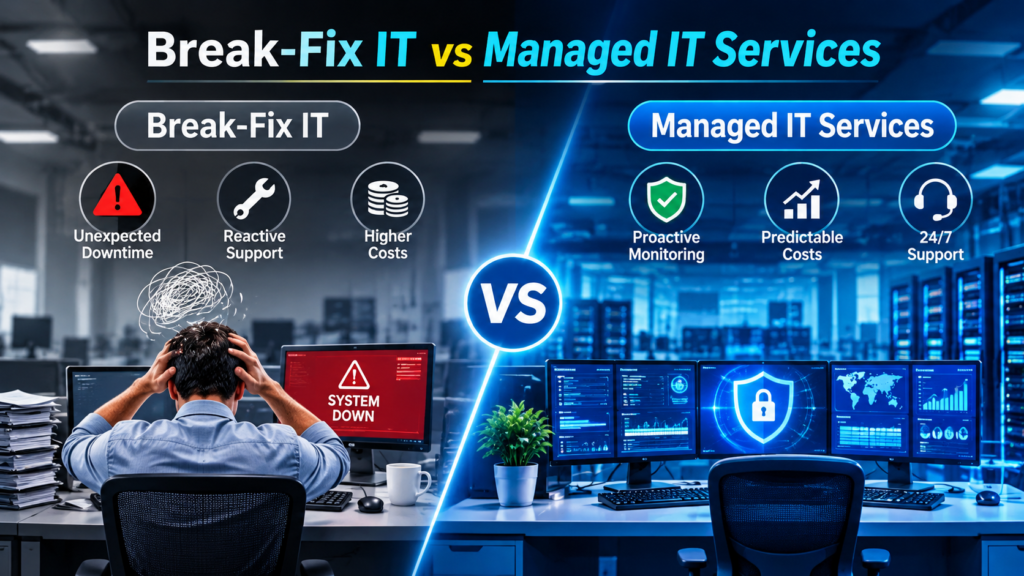
Most organizations rely on the traditional break-fix IT support model for managing their IT systems. They engage support only when something fails, and pay to resolve issues as and when it occurs. This approach might sound cost-effective but affects in the long run. However, what often goes unnoticed are the hidden costs associated with this reactive approach. Unplanned downtime, recurring system failures, security exposure, and productivity loss delay decisions and impact the operational and financial side of the organizations.
In contrast, managed IT services follow a proactive model. It responds continuously to monitor, maintain, and optimize the IT environment. A thorough difference between break-fix IT and managed services is important to know. It not just saves your immediate expenditure but also saves from critical factors like risk, system unavailability, and employee productivity.
What Is Break-Fix IT?
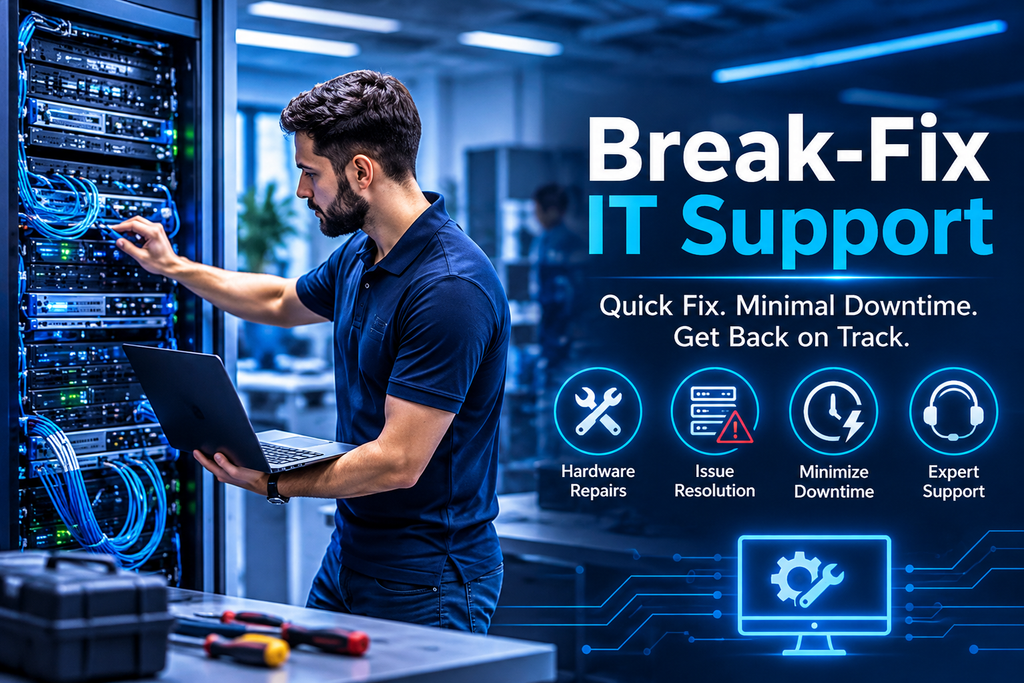
In simple terms, break-fix IT follows a reactive cycle:
- Something breaks
- A technician is called
- The issue is fixed
- A bill is generated
There is typically no continuous monitoring, long-term planning, or ongoing responsibility for system health. While this may seem practical especially for organizations aiming to avoid recurring costs, the challenge is that modern enterprise IT environments are highly interconnected and always operational. Networks, cloud platforms, applications, endpoints, and data systems must function continuously.
Waiting for a failure before acting is comparable to servicing a vehicle only after the engine stops working. By the time the problem becomes visible, the damage and the cost has already escalated.
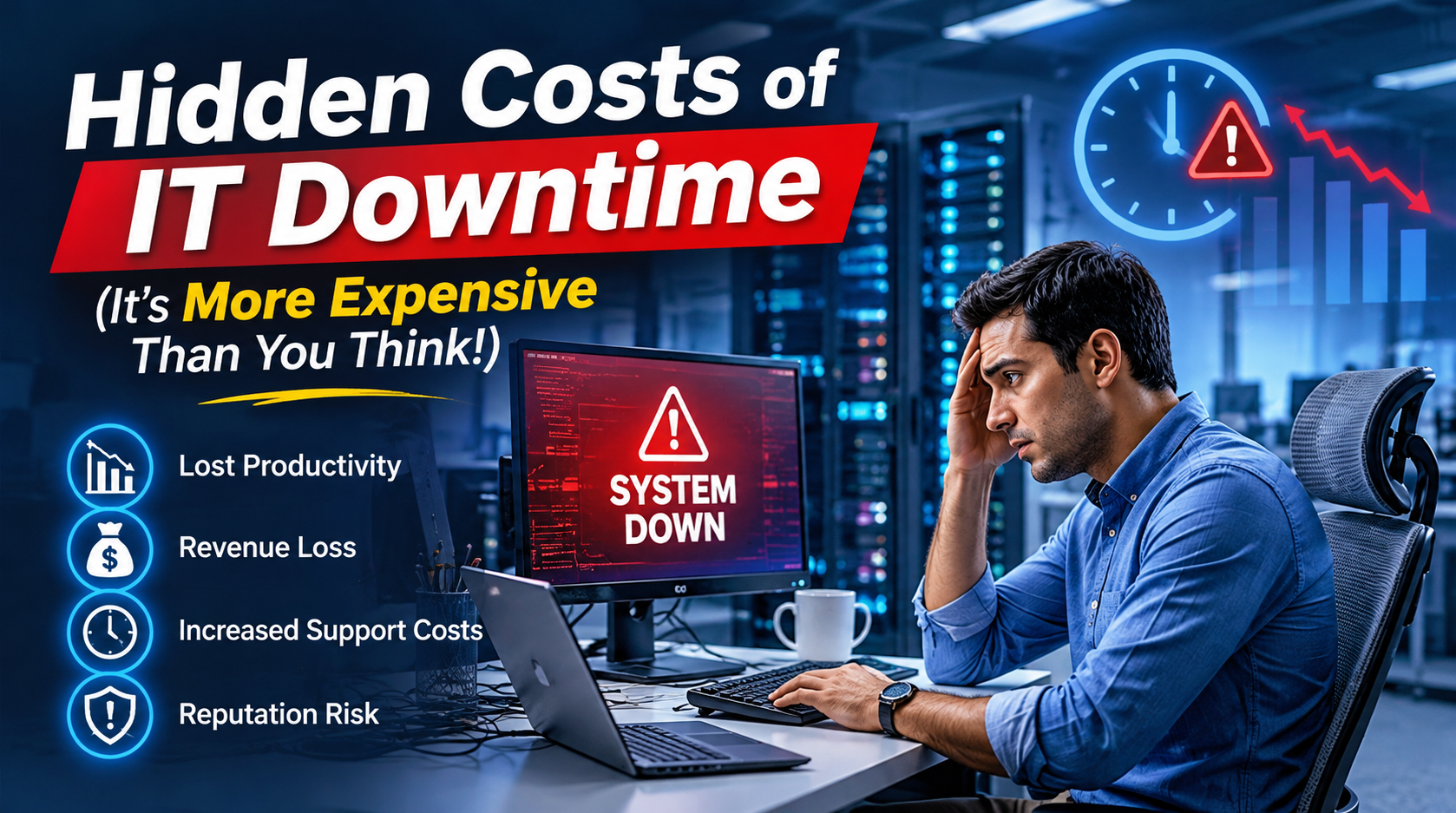
The Hidden Costs of Break-Fix IT
1. Downtime Is More Expensive Than It Appears
Every minute that systems are unavailable directly affects business operations. Employees are unable to work efficiently, customer transactions may stop, deadlines are missed, and client trust can decline.
Break-fix support addresses problems only after they occur. Managed services, on the other hand, focus on early detection and prevention often resolving issues before users are even aware of them. In many cases, a single major outage can cost more than months of proactive IT support.
2. Emergency Repairs Carry Premium Costs
Break-fix engagements are typically urgent by nature. When critical systems fail, organizations often pay higher emergency rates, and technicians are forced to resolve immediate symptoms rather than underlying causes.
This leads to recurring issues and repeated expenses. Managed services aim to reduce the frequency of emergencies through preventive IT maintenance, root-cause resolution, and ongoing system optimization.
3. IT Spending Becomes Unpredictable
Under the break-fix model, IT costs fluctuate significantly. Some months may appear inexpensive, while others bring unexpected repair or replacement bills.
For enterprises that rely on stable financial planning, unpredictable IT expenditure creates budgeting challenges. Managed services introduce a predictable cost structure, enabling better forecasting and financial control and IT cost management while reducing sudden capital outflows.
4. Security Risks Grow Quietly
Cyber threats rarely announce themselves through visible failures. Vulnerabilities such as outdated software, missed patches, weak access controls, or misconfigured systems accumulate silently.
Break-fix IT typically does not address these risks continuously. By the time a breach is detected, the organization may already face data loss, operational disruption, compliance penalties, or reputational damage.
Managed services include continuous IT infrastructure monitoring, patch management, backup validation, and vulnerability management and IT security management making prevention significantly more cost-effective than recovery.
5. Productivity Loss Is Invisible but Significant
Not all IT issues are catastrophic. Slow systems, unstable networks, application lags, and access delays gradually reduce employee efficiency.
Individually, these issues seem minor. Collectively, they result in lost work hours, reduced morale, and lower overall output. Break-fix models focus primarily on major failures, whereas managed services continuously optimize performance to maintain day-to-day productivity.
For many enterprises, this silent productivity drain is one of the largest unseen costs.
6. Lack of Long-Term Technology Direction
Break-fix IT addresses immediate problems but rarely supports long-term planning. Modern organizations require:
- Capacity and infrastructure planning
- Cloud and modernization strategies
- Security roadmaps
- Lifecycle management
- Alignment of IT with business goals
Without strategic oversight, systems become fragmented, outdated, and increasingly risky. Managed service providers act as ongoing technology partners, helping organizations evolve their IT environment in line with future business needs.

What Managed Services Actually Provide
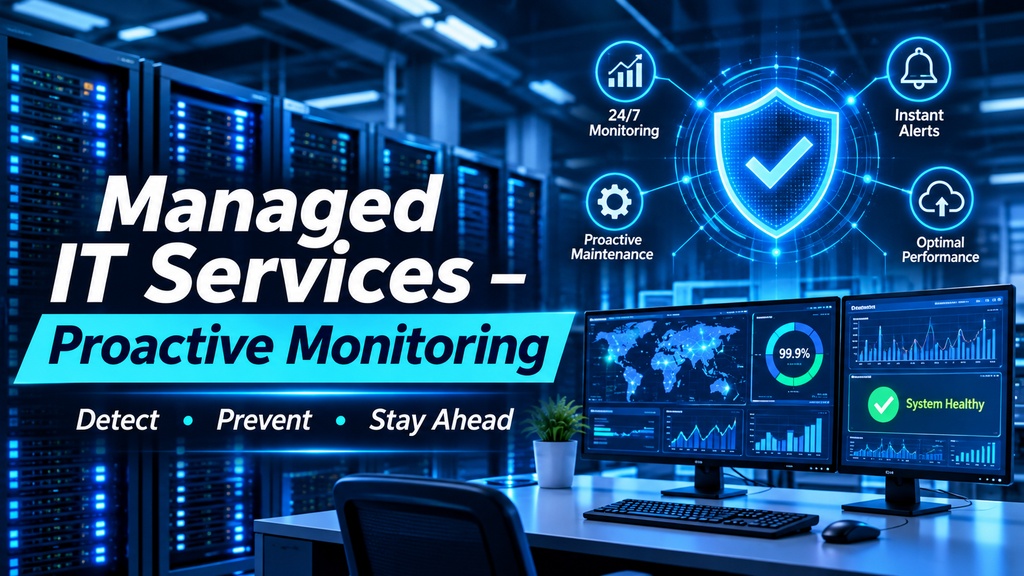
Managed services extend far beyond basic outsourced support. A mature MSP typically delivers:
- 24/7 IT infrastructure monitoring and network monitoring
- Preventive IT maintenance
- Security management and patching
- Backup and disaster recovery readiness
- Performance optimization
- Help desk and IT support for enterprises
- Documentation and visibility
- Strategic IT advisory
Instead of waiting for failures, systems are maintained continuously similar to preventive healthcare that reduces the likelihood of critical incidents.
The Real Comparison: Short-Term Savings vs Long-Term Stability
Break-fix IT may appear less expensive initially, but over time the hidden costs accumulate:
- Repeated emergency repairs
- Productivity loss
- Security incidents
- Downtime-related revenue impact
- Unplanned hardware replacements
- Reputational damage
- Increased pressure on internal teams
Managed services convert unpredictable crises into structured operations. The more relevant question for leadership is no longer “What does IT cost?” but rather “What is the cost of unstable IT to the business?”
Why Many Enterprises Still Delay the Transition
Despite the risks, organizations often remain with break-fix due to:
- Concerns about long-term contracts
- Perception that managed IT services are expensive
- Underestimation of operational risk
- Familiarity with existing processes
However, modern enterprises are fundamentally dependent on technology. IT is no longer a background function- it is the backbone of operations, customer experience, and decision-making. When IT performance declines, business performance follows.
Managed services are not simply an additional expense; they are a mechanism to protect revenue, continuity, and scalability.
Conclusion
The true cost of break-fix IT is rarely visible in a single invoice. It appears gradually through downtime, security exposure, lost productivity, operational disruption, and unpredictable spending. These hidden impacts collectively weaken business stability.
Managed services introduce consistency, visibility, and proactive control. They shift IT from a reactive support function to a structured, performance-driven capability that enables growth rather than interrupting it.
Organizations that adopt this model gain not only technical support but operational confidence knowing that their systems are continuously monitored, secured, and optimized.
HCISPLExperienced partners such as Hazelnut Cyborg Infra Solutions Pvt. Ltd. (HCISPL) helps enterprises move from firefighting mode to a stability-first approach by focusing on prevention, performance, and long-term technology alignment. With the right managed IT services strategy in place, IT evolves from a recurring risk into a dependable foundation that supports efficiency, resilience, and sustainable business expansion.
10 FAQs
1. What is break-fix IT?
Break-fix IT is a reactive support model. You call a technician only when something fails, the issue is fixed, and you pay for that work. There is no continuous monitoring, long-term planning or ongoing responsibility for the health of your systems.
2. What are managed IT services?
Managed IT services are a proactive model in which a provider continuously monitors, maintains, secures and optimizes your IT environment. The goal is to prevent problems before they affect your business, rather than reacting after a failure.
3. What is the main difference between break-fix IT and managed IT services?
Break-fix responds to problems after they happen and bills per incident. Managed services prevent problems through monitoring, maintenance and planning, usually for a predictable recurring fee.
4. Is break-fix IT really cheaper than managed services?
It can look cheaper on a single invoice, but the costs add up over time. Emergency rates, repeated repairs, downtime, productivity loss and security incidents often make break-fix more expensive overall. In many cases, one major outage costs more than months of proactive IT support.
5. How does downtime affect a business under the break-fix model?
Every minute of downtime stops employees from working, can halt customer transactions, causes missed deadlines and can damage client trust. Break-fix only acts after the outage begins, while managed services aim to detect and resolve issues early, often before users notice.
6. Why is IT spending unpredictable with break-fix support?
Costs depend on when failures occur. Some months are cheap, while others bring unexpected repair or replacement bills. Managed services use a predictable cost structure, which makes budgeting and forecasting easier.
7. How do managed IT services improve cybersecurity?
Threats like outdated software, missed patches and misconfigured systems build up silently. Managed services include continuous monitoring, patch management, backup validation and vulnerability management. This helps prevent breaches that could lead to data loss, compliance penalties or reputational damage.
8. What services does a managed service provider (MSP) typically include?
A mature MSP typically offers:
- 24/7 infrastructure and network monitoring
- Preventive IT maintenance
- Security management and patching
- Backup and disaster recovery readiness
- Performance optimization
- Help desk support
- Documentation and visibility
- Strategic IT advisory
9. Why do many enterprises delay moving from break-fix to managed services?
Common reasons are concerns about long-term contracts, the perception that managed services are expensive, underestimating operational risk and familiarity with existing processes. Since IT now underpins operations, customer experience and decision-making, delaying often costs more than it saves.10. How can Hazelnut Cyborg Infra Solutions (HCISPL) help my organization move away from break-fix IT?
HCISPL helps enterprises shift from firefighting to a stability-first approach. It focuses on prevention, performance and long-term technology alignment, so IT becomes a dependable foundation for efficiency, resilience and business growth.