
Hazelnut Cyborg Infra Solutions Pvt Ltd

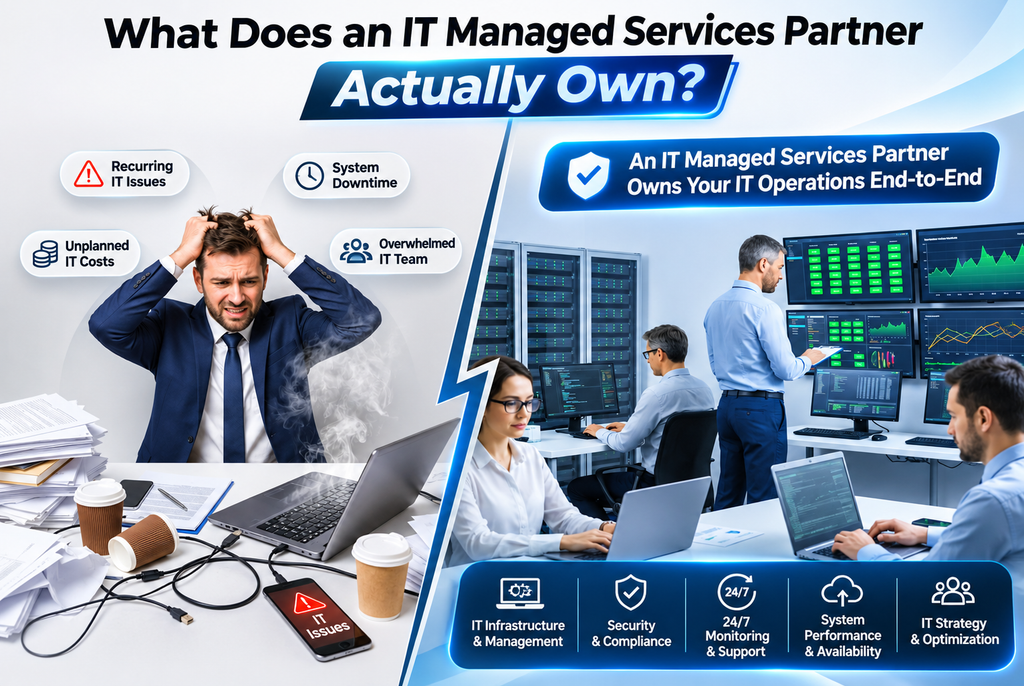
What Does an IT Managed Services Partner Actually Own?

What Does an IT Managed Services Partner Actually Own?

What Does an IT Managed Services Partner Actually Own?

Most businesses engage an managed IT services provider with the expectation of receiving comprehensive support. This often welcomes an important question- what does “comprehensive support” truly entails?

Specifically, which aspect of the IT environment does the managed service provider (MSP) actually operate or control, and the list of responsibilities that stays with the business. In reality, the truth has two perceptions. An IT managed services partner does not assume ownership of an organization’s technology assets. Instead, the provider assumes clearly defined responsibility and accountability for health, performance, and reliability of the agreed-upon system and services.

This article discusses these distinctions in better detail, clarifying the responsibilities of a managed IT services provider, the shared responsibility, and how organizations can structure the partnership to maintain standard operational value.
IT System Stability Performance

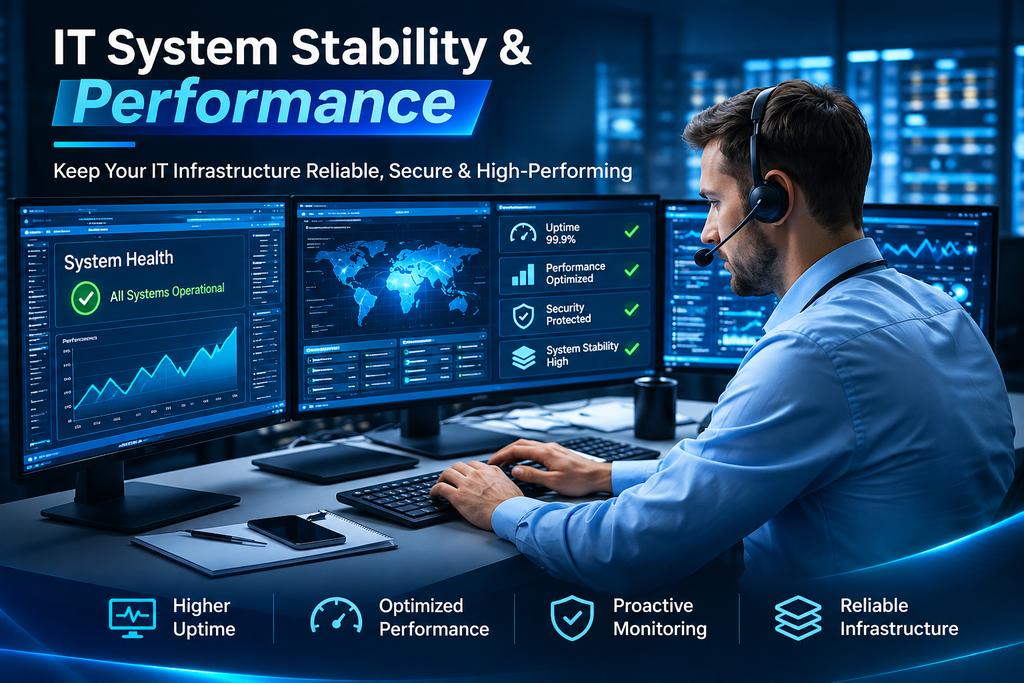
They Own IT System Stability and Performance

The first thing that a managed IT services partner maintains is IT system stability and performance.

It includes:

  • Systems should run smoothly
  • Minimization of downtime
  • Same balance in performance
  • Identifying issues on time
  • 24/7 IT infrastructure monitoring and timely incident response
  • In case your network is slow, when a server begins malfunctioning, or when your storage is almost full, they intervene before things go out of hand
  • Understanding and taking over reactive IT support to proactive IT management
  • Maintaining health of equipment and software, even though it is owned by the organisations

They Own Day-to-Day IT Operations Management

Managed IT services providers also assume responsibility of day to day IT operations management activities which in most cases overload the internal teams.

This includes:

  • IT infrastructure monitoring
  • Software updates
  • IT patch management
  • Backup checks
  • Security scans
  • Device maintenance
  • IT help desk support tickets

These are small tasks but consume a portion of time that can be contributed to operational tasks. In the absence of ownership, they are postponed or forgotten. This is when systems become obsolete and unsafe. A managed services partner makes sure that these are done not once in a while, but on a regular basis. It is in the consistency that enterprise IT works upon.

They Own Preventive IT Maintenance

IT disasters are not an abrupt occurrence. It drives out from overlooked maintenance.

Expired patches, broken devices, and unnoticed warnings gradually accumulate causing major disasters. Preventive IT maintenance is a core responsibility of a managed IT services partner.

Preventive ownership covers:

  • Scheduled updates
  • Hardware health checks
  • Capacity planning
  • Storage cleanup
  • Backup testing
  • Security hardening
  • Crises make beasts but not gospels when rightfully owned.

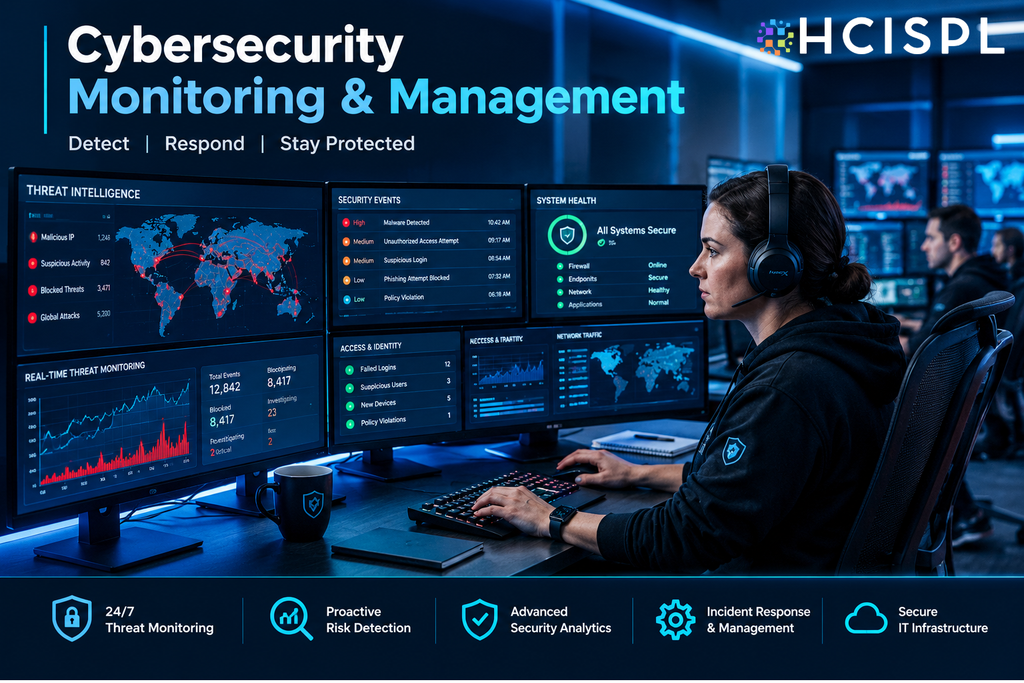
They Own Cybersecurity Monitoring and Management

Enterprises no longer have an option in the topic of cybersecurity. It’s a constant battlefield.

Active IT security monitoring falls within the scope of responsibility of a managed IT services partner.

The managed security services in this area include:

  • Monitoring suspicious activities.
  • Security patches are applied fast.
  • Firewall and endpoint security monitoring
  • Vulnerability assessments
  • Maintaining backups
  • Responding to incidents

They are not merely responding to attacks. They are also reducing cybersecurity risks through continuous monitoring and prevention.

Notably, they possess the process, and not your data. The data, compliance and ultimate decisions of your business remain with your enterprise. The partner is however the owner of the operation security work that safeguards such assets.
Blog 17 11what does an it 3

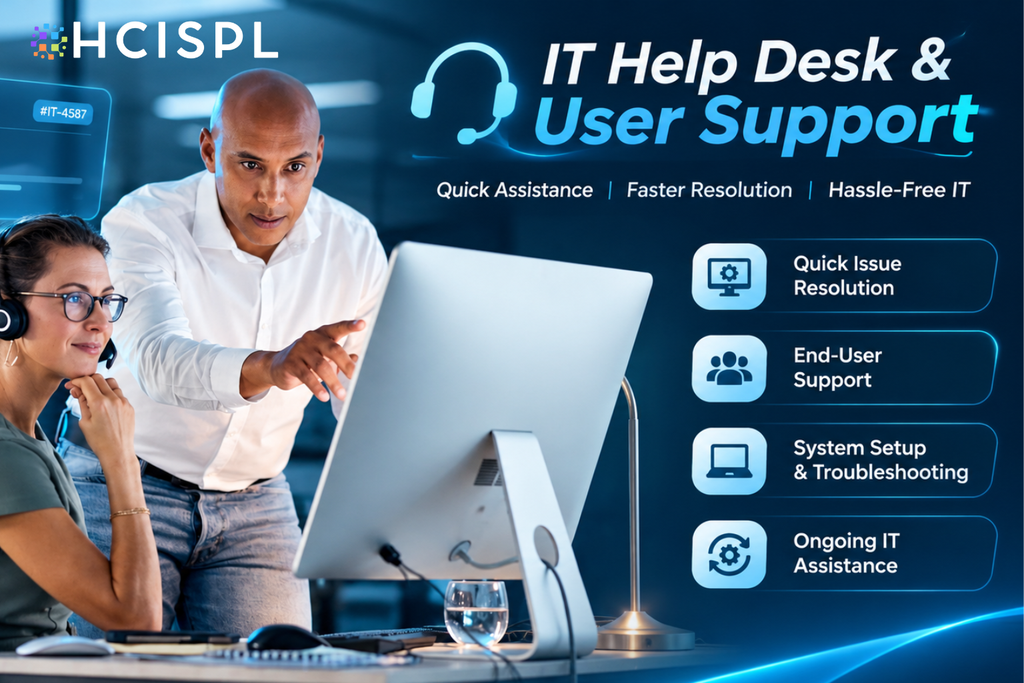
They Own IT Help Desk and User Support

Employees feel no need to be excused when they have IT problems. They want fast help.

A managed IT support provider is responsible for delivering timely IT help desk support.

Their support area includes:

  • IT help desk response times
  • Ticket resolution
  • Communication clarity
  • Escalation management
  • User satisfaction

The measurement is conducted on service quality, rather than only on technical means.

HCISPL Good managed IT services providers like Hazelnut Cyborg Infra Solutions Pvt. Ltd do not just resolve problems. They render support to businesses to eliminate last moment system failure and stress. HCISPL ensures that company strength i.e; its IT system never gets compromised.
Blog 17 11what does an it 4

They Own IT Documentation and Infrastructure Visibility

Documentation is one of the responsibilities that often gets ignored. Most businesses struggle and miss out on important information because of lack of knowledge since it is embedded in the minds of individuals. When employees move, there is loss of information and visibility gets compromised. An ordered IT infrastructure documentation process of a managed IT services partner includes the following important aspects:

  • Network diagrams
  • System configurations
  • Access records
  • IT asset inventories
  • Backup procedures
  • Recovery plans
  • This creates visibility.

Leadership is able to have a clear vision of infrastructure rather than conjecture. Paperwork may not be fun but it forms a basis of trusted IT.

They Own Continuous IT Improvement and Optimization

Maintenance is not the only issue with managed IT services. It also includes continuous improvement and optimization.

Technology changes fast. The systems should change in order to remain effective and safe.

A firm partner undertakes the ongoing improvement process by:

  • Recommending upgrades
  • Identifying risks
  • Suggesting optimizations
  • Planning capacity growth
  • Fitting IT with business objectives.
  • They do not simply operate like technicians, but like advisors.

HCIPSL The IT managed services partner HCISPL understands what it takes to handle IT infrastructure improvement tasks. They work forward, with a road map, instead of lagging behind.

What They Do NOT Own

It is also as vital to know the limits as it is to know ownership of responsibility. In the case of a managed IT services provider, the partner does not own:

  • Your business decisions
  • Your data ownership
  • Your compliance liability
  • Your budget authority
  • Your strategic direction

They assist in decisions and counsel and ultimate authority rests with the business. Such balance maintains accountability. The relationship with a managed IT services provider is a shared-responsibility partnership, not a takeover.

Blog 17 11what does an it 5

Conclusion

An IT managed services partner does not own an organization’s technology assets; instead, they own the responsibility of keeping them reliable, secure, and consistent. Their value lies in proactive IT management—ensuring stability, reducing risk, preventing downtime, and maintaining operational efficiency through continuous IT infrastructure monitoring.

At the same time, ownership of business decisions, compliance, budgets, strategic decisions, and data lies with the organization. This balance defines a successful managed services relationship and not a controlled one.

Hazelnut Cyborg Infra Solutions Pvt. Ltd When implemented in a disciplined manner, managed IT services transform IT from a reactive support function into a stable one. A trusted managed service provider (MSP) plays an important role. Hazelnut Cyborg Infra Solutions Pvt. Ltd focuses not only on resolving issues but also on strengthening the system and improving visibility. They turn IT from a potential risk into a dependable foundation for growth.


Frequently Asked Questions (FAQs)

1. What Does an IT Managed Services Partner Actually Own?

An IT managed services partner takes responsibility for managing and maintaining the agreed IT systems and services. This includes system monitoring, IT operations, preventive maintenance, security monitoring, help desk support, and documentation. However, the business retains ownership of its technology assets, data, budgets, and strategic decisions.

2. Does an IT Managed Services Provider Own a Company’s Data?

No, an IT managed services provider does not own the company’s data. The organization retains data ownership and control over important business decisions. The provider is responsible for managing agreed security processes, monitoring systems, and helping protect business information.

3. What Services Are Included in Managed IT Services?

Managed IT services generally include system monitoring, software updates, patch management, backup checks, security scans, device maintenance, user support, and incident response. The exact services depend on the agreement between the business and the managed services provider.

4. How Does a Managed Services Partner Reduce IT Downtime?

A managed services partner helps reduce IT downtime through continuous system monitoring, preventive maintenance, regular updates, and early identification of technical issues. By addressing potential problems before they become major disruptions, businesses can maintain better system stability and operational efficiency.

5. Who Is Responsible for Cybersecurity in a Managed IT Services Partnership?

Cybersecurity is a shared responsibility between the business and its managed IT services provider. The provider may handle security monitoring, vulnerability assessments, firewall monitoring, security patches, and incident response. However, the business retains responsibility for its data, compliance requirements, and final security decisions.

6. What Is the Difference Between IT Asset Ownership and IT Service Responsibility?

IT asset ownership refers to the company’s ownership of hardware, software, data, and other technology resources. IT service responsibility refers to the managed services provider’s responsibility for monitoring, maintaining, and supporting those resources according to the agreed service scope.

7. What Should Businesses Check Before Choosing an IT Managed Services Partner?

Businesses should evaluate the provider’s service scope, IT infrastructure monitoring capabilities, security practices, help desk support, response times, documentation processes, and reporting methods. It is also important to understand which responsibilities belong to the provider and which remain with the business.

8. Why Is IT Documentation Important in Managed Services?

IT documentation helps businesses maintain visibility into their technology infrastructure. It includes network diagrams, system configurations, access records, IT asset inventories, backup procedures, and recovery plans. Proper documentation also reduces dependency on individual employees and supports smoother IT operations.

9. Can an IT Managed Services Partner Make Business Decisions?

No, an IT managed services partner does not take control of the organization’s business decisions. The provider can recommend technology upgrades, identify risks, suggest optimizations, and provide technical guidance. However, final decisions regarding budgets, compliance, data ownership, and business strategy remain with the organization.

10. How Can Businesses Measure the Performance of an IT Managed Services Provider?

Businesses can measure provider performance through system availability, downtime reduction, incident response times, ticket resolution, security monitoring reports, backup testing, and maintenance activities. Regular performance reviews help ensure that the provider is meeting the agreed service expectations and supporting business objectives.


Most businesses engage an managed IT services provider with the expectation of receiving comprehensive support. This often welcomes an important question- what does “comprehensive support” truly entails?

Specifically, which aspect of the IT environment does the managed service provider (MSP) actually operate or control, and the list of responsibilities that stays with the business. In reality, the truth has two perceptions. An IT managed services partner does not assume ownership of an organization’s technology assets. Instead, the provider assumes clearly defined responsibility and accountability for health, performance, and reliability of the agreed-upon system and services.

This article discusses these distinctions in better detail, clarifying the responsibilities of a managed IT services provider, the shared responsibility, and how organizations can structure the partnership to maintain standard operational value.

IT System Stability Performance

They Own IT System Stability and Performance

The first thing that a managed IT services partner maintains is IT system stability and performance.

It includes:

  • Systems should run smoothly
  • Minimization of downtime
  • Same balance in performance
  • Identifying issues on time
  • 24/7 IT infrastructure monitoring and timely incident response
  • In case your network is slow, when a server begins malfunctioning, or when your storage is almost full, they intervene before things go out of hand
  • Understanding and taking over reactive IT support to proactive IT management
  • Maintaining health of equipment and software, even though it is owned by the organisations

They Own Day-to-Day IT Operations Management

Managed IT services providers also assume responsibility of day to day IT operations management activities which in most cases overload the internal teams.

This includes:

  • IT infrastructure monitoring
  • Software updates
  • IT patch management
  • Backup checks
  • Security scans
  • Device maintenance
  • IT help desk support tickets

These are small tasks but consume a portion of time that can be contributed to operational tasks. In the absence of ownership, they are postponed or forgotten. This is when systems become obsolete and unsafe. A managed services partner makes sure that these are done not once in a while, but on a regular basis. It is in the consistency that enterprise IT works upon.

They Own Preventive IT Maintenance

IT disasters are not an abrupt occurrence. It drives out from overlooked maintenance.

Expired patches, broken devices, and unnoticed warnings gradually accumulate causing major disasters. Preventive IT maintenance is a core responsibility of a managed IT services partner.

Preventive ownership covers:

  • Scheduled updates
  • Hardware health checks
  • Capacity planning
  • Storage cleanup
  • Backup testing
  • Security hardening
  • Crises make beasts but not gospels when rightfully owned.

They Own Cybersecurity Monitoring and Management

Enterprises no longer have an option in the topic of cybersecurity. It’s a constant battlefield.

Active IT security monitoring falls within the scope of responsibility of a managed IT services partner.

The managed security services in this area include:

  • Monitoring suspicious activities.
  • Security patches are applied fast.
  • Firewall and endpoint security monitoring
  • Vulnerability assessments
  • Maintaining backups
  • Responding to incidents

They are not merely responding to attacks. They are also reducing cybersecurity risks through continuous monitoring and prevention.

Notably, they possess the process, and not your data. The data, compliance and ultimate decisions of your business remain with your enterprise. The partner is however the owner of the operation security work that safeguards such assets.

Blog 17 11what does an it 3

They Own IT Help Desk and User Support

Employees feel no need to be excused when they have IT problems. They want fast help.

A managed IT support provider is responsible for delivering timely IT help desk support.

Their support area includes:

  • IT help desk response times
  • Ticket resolution
  • Communication clarity
  • Escalation management
  • User satisfaction

The measurement is conducted on service quality, rather than only on technical means.

HCISPL Good managed IT services providers like Hazelnut Cyborg Infra Solutions Pvt. Ltd do not just resolve problems. They render support to businesses to eliminate last moment system failure and stress. HCISPL ensures that company strength i.e; its IT system never gets compromised.

Blog 17 11what does an it 4

They Own IT Documentation and Infrastructure Visibility

Documentation is one of the responsibilities that often gets ignored. Most businesses struggle and miss out on important information because of lack of knowledge since it is embedded in the minds of individuals. When employees move, there is loss of information and visibility gets compromised. An ordered IT infrastructure documentation process of a managed IT services partner includes the following important aspects:

  • Network diagrams
  • System configurations
  • Access records
  • IT asset inventories
  • Backup procedures
  • Recovery plans
  • This creates visibility.

Leadership is able to have a clear vision of infrastructure rather than conjecture. Paperwork may not be fun but it forms a basis of trusted IT.

They Own Continuous IT Improvement and Optimization

Maintenance is not the only issue with managed IT services. It also includes continuous improvement and optimization.

Technology changes fast. The systems should change in order to remain effective and safe.

A firm partner undertakes the ongoing improvement process by:

  • Recommending upgrades
  • Identifying risks
  • Suggesting optimizations
  • Planning capacity growth
  • Fitting IT with business objectives.
  • They do not simply operate like technicians, but like advisors.

HCIPSL The IT managed services partner HCISPL understands what it takes to handle IT infrastructure improvement tasks. They work forward, with a road map, instead of lagging behind.

What They Do NOT Own

It is also as vital to know the limits as it is to know ownership of responsibility. In the case of a managed IT services provider, the partner does not own:

  • Your business decisions
  • Your data ownership
  • Your compliance liability
  • Your budget authority
  • Your strategic direction

They assist in decisions and counsel and ultimate authority rests with the business. Such balance maintains accountability. The relationship with a managed IT services provider is a shared-responsibility partnership, not a takeover.

Blog 17 11what does an it 5

Conclusion

An IT managed services partner does not own an organization’s technology assets; instead, they own the responsibility of keeping them reliable, secure, and consistent. Their value lies in proactive IT management—ensuring stability, reducing risk, preventing downtime, and maintaining operational efficiency through continuous IT infrastructure monitoring.

At the same time, ownership of business decisions, compliance, budgets, strategic decisions, and data lies with the organization. This balance defines a successful managed services relationship and not a controlled one.

Hazelnut Cyborg Infra Solutions Pvt. Ltd When implemented in a disciplined manner, managed IT services transform IT from a reactive support function into a stable one. A trusted managed service provider (MSP) plays an important role. Hazelnut Cyborg Infra Solutions Pvt. Ltd focuses not only on resolving issues but also on strengthening the system and improving visibility. They turn IT from a potential risk into a dependable foundation for growth.


Frequently Asked Questions (FAQs)

1. What Does an IT Managed Services Partner Actually Own?

An IT managed services partner takes responsibility for managing and maintaining the agreed IT systems and services. This includes system monitoring, IT operations, preventive maintenance, security monitoring, help desk support, and documentation. However, the business retains ownership of its technology assets, data, budgets, and strategic decisions.

2. Does an IT Managed Services Provider Own a Company’s Data?

No, an IT managed services provider does not own the company’s data. The organization retains data ownership and control over important business decisions. The provider is responsible for managing agreed security processes, monitoring systems, and helping protect business information.

3. What Services Are Included in Managed IT Services?

Managed IT services generally include system monitoring, software updates, patch management, backup checks, security scans, device maintenance, user support, and incident response. The exact services depend on the agreement between the business and the managed services provider.

4. How Does a Managed Services Partner Reduce IT Downtime?

A managed services partner helps reduce IT downtime through continuous system monitoring, preventive maintenance, regular updates, and early identification of technical issues. By addressing potential problems before they become major disruptions, businesses can maintain better system stability and operational efficiency.

5. Who Is Responsible for Cybersecurity in a Managed IT Services Partnership?

Cybersecurity is a shared responsibility between the business and its managed IT services provider. The provider may handle security monitoring, vulnerability assessments, firewall monitoring, security patches, and incident response. However, the business retains responsibility for its data, compliance requirements, and final security decisions.

6. What Is the Difference Between IT Asset Ownership and IT Service Responsibility?

IT asset ownership refers to the company’s ownership of hardware, software, data, and other technology resources. IT service responsibility refers to the managed services provider’s responsibility for monitoring, maintaining, and supporting those resources according to the agreed service scope.

7. What Should Businesses Check Before Choosing an IT Managed Services Partner?

Businesses should evaluate the provider’s service scope, IT infrastructure monitoring capabilities, security practices, help desk support, response times, documentation processes, and reporting methods. It is also important to understand which responsibilities belong to the provider and which remain with the business.

8. Why Is IT Documentation Important in Managed Services?

IT documentation helps businesses maintain visibility into their technology infrastructure. It includes network diagrams, system configurations, access records, IT asset inventories, backup procedures, and recovery plans. Proper documentation also reduces dependency on individual employees and supports smoother IT operations.

9. Can an IT Managed Services Partner Make Business Decisions?

No, an IT managed services partner does not take control of the organization’s business decisions. The provider can recommend technology upgrades, identify risks, suggest optimizations, and provide technical guidance. However, final decisions regarding budgets, compliance, data ownership, and business strategy remain with the organization.

10. How Can Businesses Measure the Performance of an IT Managed Services Provider?

Businesses can measure provider performance through system availability, downtime reduction, incident response times, ticket resolution, security monitoring reports, backup testing, and maintenance activities. Regular performance reviews help ensure that the provider is meeting the agreed service expectations and supporting business objectives.


What Does an IT Managed Services Partner Actually Own?

Scroll to Top